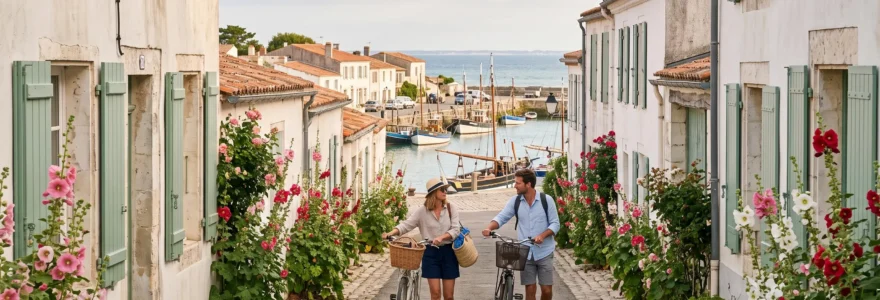
If you’re road-tripping in western France, the best coastal villages on Île de Ré aren’t “all the same” at all—and that’s exactly why choosing can feel tricky when you’ve only got a few days. Some places are all about an oyster-working harbour and a slow walk on the quay; others are built around fortifications, a lively port, or a wilder Atlantic edge.
The easiest way to avoid disappointment is to compare villages using the same lens each time: atmosphere, port, heritage, and access. That way, you can prioritise confidently and build a coastal route that fits your pace, not a generic checklist.
Pick the right villages quickly (atmosphere • port • heritage • access)
- Short on time: start with Saint-Martin-de-Ré (heritage + harbour) and add either Ars-en-Ré (oyster-port vibe) or Les Portes-en-Ré (nature + Atlantic edge).
- Want authenticity: aim for quieter months; Destination Île de Ré points to April, May, June, September and October as calmer periods.
- Driving: parking and access rules can change by season—check local tourist office pages before you go.
What Makes Île de Ré’s Coastal Villages Worth Exploring?
Île de Ré’s coastal villages are worth the detour because they share a recognisable island identity—harbours, oyster-farming culture, pale façades and colourful shutters—while still feeling genuinely different from one another once you’re on the ground. In practice, it means you can choose villages that match your mood (history, harbour life, wild coastline) instead of trying to squeeze in everything.
That “small-village” scale also works well for a road trip: you can park, do a focused walk, and move on without turning your day into a marathon. The key is to treat access and parking as part of the choice—some places are straightforward, others are much easier early in the day in peak season.
If you want a realistic picture of crowd levels, Destination Île de Ré (the island’s official tourist office) notes the island receives close to three million visitors annually, with April, May, June, September and October highlighted as quieter months on its page about quietest months to visit.
The Must-Visit Villages on the Island’s Coast
Réponse directe : If you want a high-confidence first pick, prioritise Saint-Martin-de-Ré for heritage and harbour life, then add Ars-en-Ré for an oyster-port feel or Les Portes-en-Ré for a wilder Atlantic edge—depending on whether you’re chasing history, harbour atmosphere, or nature.
Below is a practical, village-by-village selection you can actually use when time is short. Each one is described with the same four criteria—atmosphere, port, heritage, access—so you can compare quickly and avoid the “too touristy for me” trap.
Saint-Martin-de-Ré: heritage-first with a lively harbour
Atmosphere: animated and walkable, with that “port town” feel where you can easily spend a couple of hours without noticing the time.
Port: a central harbour that naturally anchors your visit—ideal if you want cafés, a promenade, and people-watching built into the itinerary.
Heritage: the village is known for its Vauban fortifications (citadel and ramparts). For practical planning, the local tourist office is also one of the clearest official sources for access rules and parking options.
Access: in high season, car access rules can affect how you time your arrival. Saint-Martin-de-Ré tourist office indicates that “En saison : borne à l’entrée du village, accès en voiture uniquement avant 10h30 le matin” (verbatim from its practical info), and it lists paid Vauban parking (around 200 m from the office) and free parking near Plage de la Cible (around 900 m). See the details on the Saint-Martin-de-Ré parking access rules page.
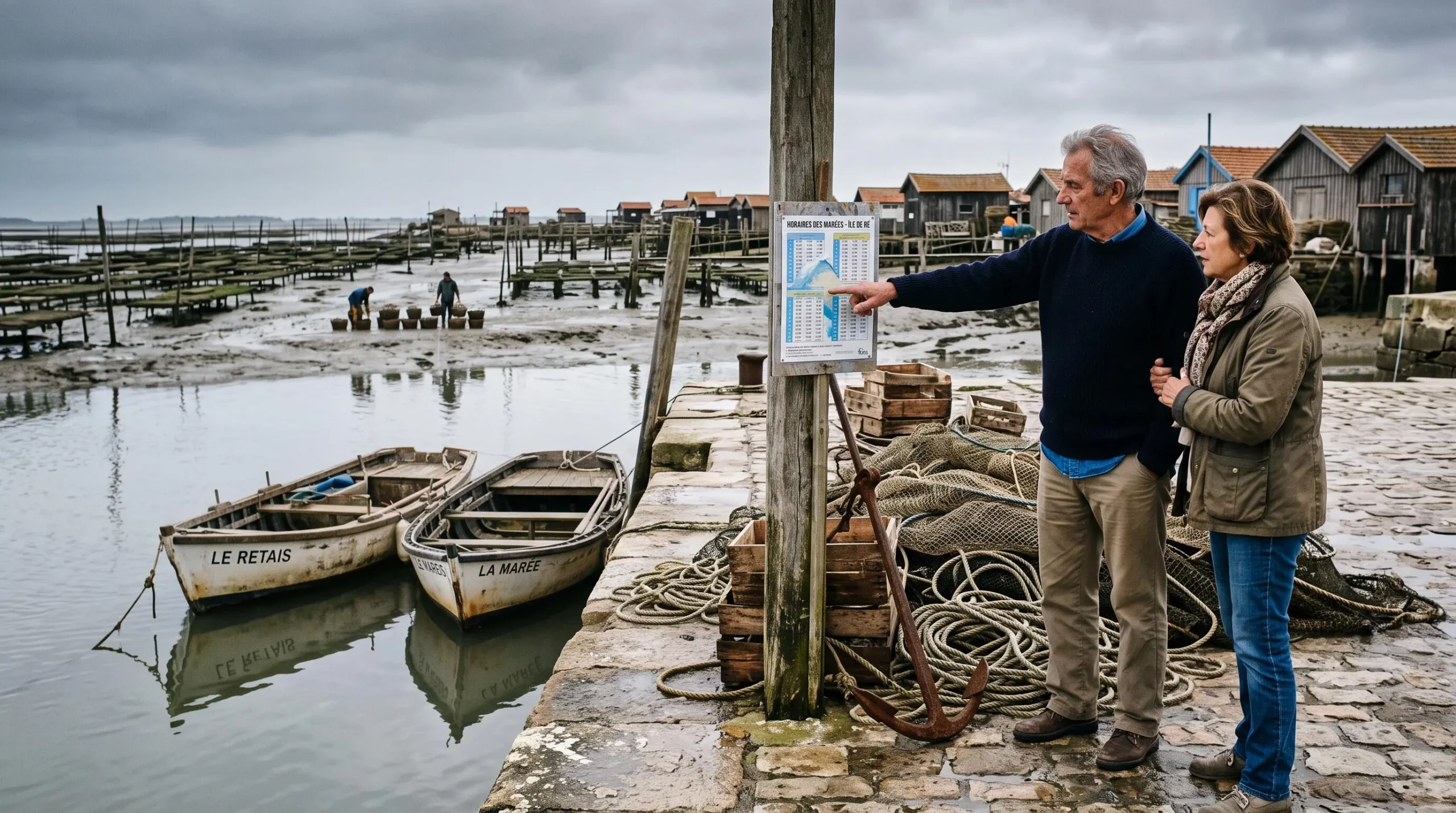
Ars-en-Ré: the oyster-port mood when you want something quieter
Atmosphere: slower, more “harbour lanes and salt air” than big-sights sightseeing—great if your goal is to feel the island rather than tick boxes.
Port: look for the oyster-working side of the coast: simple quays, working boats, and a day shaped by the water. A useful rule of thumb is to plan a short harbour loop plus a second stop elsewhere, so you don’t “overstay” if you’re on a tight schedule.
Heritage: if you’re choosing between heritage-heavy and harbour-led villages, Ars-en-Ré usually makes more sense as the harbour counterpoint to Saint-Martin-de-Ré. (Specific labels or rankings vary; confirm any “classified” status on official local sources before you rely on it.)
Access: treat parking as something to scout on arrival—aim to park once and do the visit on foot, especially in busy periods.
Les Portes-en-Ré: Atlantic-facing nature and a “wilder edge” feel
Atmosphere: open, outdoorsy, and best suited to travellers who want beaches, forest, and space between stops rather than a dense historic centre.
Port: you come here less for a classic marina vibe and more for coastline views and time outside.
Heritage: the heritage appeal is subtler—think landscape and island character more than monuments.
Access: it’s a good match for a road trip because you can combine short village time with a longer coastal or beach stop, keeping the day balanced.
Still hesitating? Use this quick comparison table to make a clean decision before you start the engine.
| Village | Best for | Watch out for |
|---|---|---|
| Saint-Martin-de-Ré | Heritage + harbour life in one stop | Seasonal access/parking rules; arrive early in peak periods |
| Ars-en-Ré | Quieter oyster-port atmosphere | Don’t expect a “big sights” visit—pair it with another stop |
| Les Portes-en-Ré | Nature, beaches, Atlantic edge | Plan your day around outdoor time, not just the village centre |
- You want history and an easy “all-in-one” visit:
Start with Saint-Martin-de-Ré and plan around parking/access constraints in season.
- You want a working-harbour feel and a slower pace:
Add Ars-en-Ré as your harbour-atmosphere stop.
- You’re craving beaches and open landscapes:
Make Les Portes-en-Ré your “nature day” anchor and keep village time lighter.
How to Plan Your Coastal Route Around the Island?
The simplest way to plan a coastal route around Île de Ré by car is to commit to one direction (east-to-west or west-to-east) and avoid backtracking. It sounds obvious, but it’s the difference between a relaxed loop and a day spent re-parking and repeating the same roads.
Because verified, up-to-date drive times and parking locations can change (works, seasonal rules, temporary closures), treat any itinerary as a framework. Before you lock in timings, cross-check routes and conditions on the day using a current map and the relevant local tourist office pages.

A one-day coastal plan (example you can adapt)
Here’s a simple day structure that works well for a road trip pace, especially if you dislike crowded midday parking. It’s an example, not a fixed recipe—swap villages based on what you chose in the comparison above.
- Morning: start in Saint-Martin-de-Ré early, when access and parking tend to be easier in season (check local rules before you go).
- Midday: drive towards a quieter harbour stop such as Ars-en-Ré for a short quay walk and a low-key lunch.
- Afternoon: finish on the Atlantic-facing side (for example near Les Portes-en-Ré) for beach or nature time, when you’re happy to slow down.
Parking and access: how to avoid wasting time
The most reliable strategy is to assume that the most “famous” stops will be the least forgiving at peak times. If you’re visiting in summer, build your day around early arrival in your top-priority village, then use flexible, outdoorsy stops later when schedules matter less.
Seasonal rules can change village access: even within the same island, one village may restrict car entry at certain times while another remains straightforward. Check official local guidance close to your travel date.
Mix car and cycling for short sections
If you want the “coastal route” feeling without committing to a fully cycling holiday, consider doing one short segment by bike: park once, cycle a flat stretch, then return to the car. It’s a good compromise when you want harbour-to-harbour scenery but still need a road-trip schedule.
Can I easily reach and park in the villages by car?
Generally, yes—but rules and convenience vary by village and season. For Saint-Martin-de-Ré, the local tourist office states that in high season, car access is only allowed before 10:30 a.m., and it lists both paid and free parking options nearby. For other villages, check the relevant local tourist office information close to your travel date.
Which villages should I prioritise if I only have a few days on Île de Ré?
Pick one “heritage + harbour” base (most travellers choose Saint-Martin-de-Ré), then add one contrasting stop: Ars-en-Ré for a quieter oyster-port mood, or Les Portes-en-Ré for beaches and a wilder Atlantic edge. This keeps your itinerary varied without rushing.
What makes each coastal village different from the others?
The difference is usually a mix of atmosphere (busy vs calm), the type of port (working harbour vs pleasure boats), and the weight of heritage (fortifications and historic fabric vs landscape-led character). Comparing villages with the same four criteria makes the choice clearer.
When Is the Best Time to Visit?
If your main worry is “too busy, too touristy”, aim for the shoulder season rather than the height of summer. Destination Île de Ré (official tourist office) explicitly points to April, May, June, September and October as quieter months, which usually makes village walks, harbours and markets feel more local and less rushed.
There’s also a real scale shift in summer. An INRAE research article notes Île de Ré’s population can swell to around 180,000 people at the height of summer, compared with a permanent population near 17,500, illustrating how different the experience can feel depending on your dates (source: INRAE – Revue SESAME, “L’île de Ré, attractive et vulnérable”).
Practically, that means: if you must travel in peak season, plan your “must-see” villages early in the day, and leave beach and nature time for later, when crowds matter less to enjoyment.
Turning Your Île de Ré Visit into a European Road Trip
Île de Ré works well as either a standalone stop or a wider Atlantic-coast loop: you can treat it as a calm “reset” between longer drives, or as a base to explore the wider west of France at a slower rhythm. The most useful mindset is to plan in short, distinct days: one day for heritage and harbour life, one day for the island’s quieter ports, one day for beaches and open landscapes.
If you’re mapping out the rest of your drive, you might also like this shortlist of European car-trip stops that can pair naturally with a western France itinerary.
Whichever direction you take, the simplest way to make the best coastal villages on Île de Ré feel memorable is to choose on purpose: one village for heritage, one for harbour atmosphere, one for the Atlantic edge. That’s how you keep your road trip moving—without feeling like you missed the point of the island.